

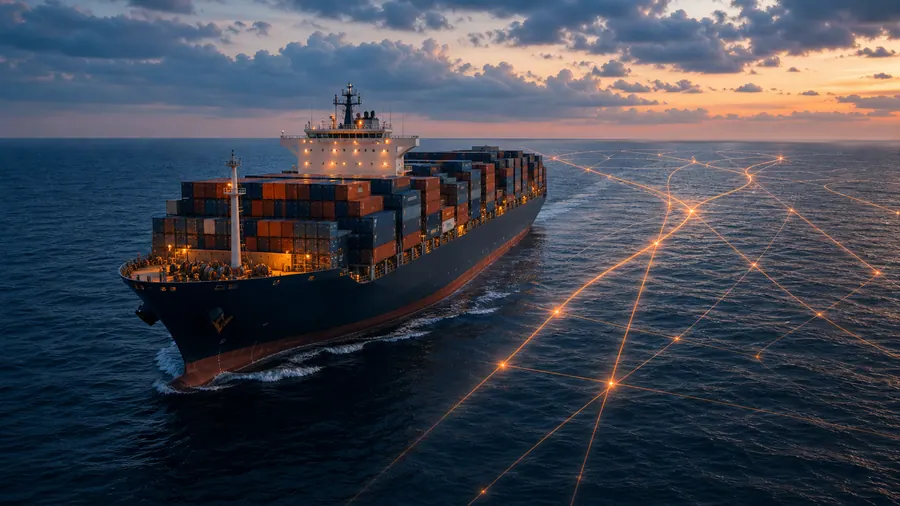
APEC talks between China, the United States and Russia matter to cross-border trade because they set the political weather for sanctions screening, war-risk insurance and vessel capacity long before any tariff line actually changes. For buyers moving breakbulk, RoRo, out-of-gauge (OOG) and project cargo out of China into the Middle East, Africa and South Asia, the impact is practical rather than diplomatic: documents clear faster or slower, underwriters reprice politically exposed routes, and carriers decide whether to release extra multipurpose capacity or keep it tight.
What the APEC talks actually changed for shippers
Summit meetings rarely produce binding trade rules. What they produce is direction of travel: a pause in tariff escalation, a softer tone on secondary sanctions, or a restart of dialogue on shipping corridors. Carriers, banks and underwriters read that direction of travel faster than governments publish it.
Three transmission channels matter most in freight:
- Sanctions and banking friction. When rhetoric cools, compliance teams at Chinese and Gulf banks release letters of credit with fewer queries. When it hardens, even clean cargo sits behind extra end-user checks.
- Insurance pricing. War-risk and political-violence premiums on Red Sea, Black Sea and certain African transit routes respond to diplomatic tone within weeks.
- Capacity planning. Multipurpose (MPP) and RoRo operators decide where to position vessels two to three quarters ahead. A calmer geopolitical outlook encourages them to add China–Middle East and China–Africa rotations.
Why a China-US-Russia signal reaches Middle East, Africa and South Asia lanes
Most heavy equipment shipped from Shanghai, Tianjin, Qingdao and Shenzhen to Jebel Ali, Dammam, Lagos, Mombasa or Chittagong is not destined for the US or Russia at all. The link is indirect but real.
Russian crude and product flows set the tone for tanker and bulk tonnage, and tonnage availability cascades into MPP and breakbulk space. Chinese EPC contractors building in Saudi Arabia, the UAE, Nigeria and Bangladesh buy equipment on the assumption that Chinese export credit and insurance remain available; any shift in US–China financial friction changes their financing timetable, and therefore their shipping timetable. A softer US–Russia posture would, over time, reduce the Red Sea and Black Sea risk premium that currently inflates every Suez routing. None of this is instant, which is exactly why it belongs in your planning cycle rather than your spot-buying decision.
The four rate factors to watch this quarter
Bunker and fuel adjustments
VLSFO prices in Singapore and Zhoushan drive the BAF element on both container and MPP bookings. Fuel has been the most volatile line item on China-origin quotations over the past year; expect fuel surcharges to move in the 5–15% band quarter on quarter, independent of headline diplomacy.
Capacity discipline and blank sailings
Container capacity on China–Middle East and China–India lanes remains the swing factor. When carriers blank sailings to protect rates, OOG and flat-rack space disappears first, because those slots are the least profitable per cubic metre. Book flat racks and open-tops four to six weeks ahead on peak weeks.
RoRo deck space and OOG equipment
RoRo deck space is finite and allocated by height and deck load. High-and-heavy units such as excavators, dozers, reach stackers and wheel loaders compete with rolling stock for the same decks. Rates for China–Middle East RoRo move in a wide band depending on vessel type and whether the unit is self-propelled or needs mafi handling.
War-risk and cargo insurance premiums
All-risk cargo insurance for project moves typically prices in a range of 0.15%–0.6% of CIF value depending on route, packing quality and survey requirements. Politically exposed transit such as the Red Sea, the Gulf of Aden and certain West African ports sits at the top of that band, and can move quickly after a diplomatic incident or, in the other direction, after a credible de-escalation.
Typical transit times from China by destination
These are indicative port-to-port ranges for planning, not commitments; schedule reliability, transhipment and port congestion move them by a week or more.
- Jebel Ali / Dammam: 18–26 days container, 25–35 days breakbulk or MPP, 24–32 days RoRo.
- Nhava Sheva / Mundra: 16–24 days container, 22–30 days MPP.
- Karachi / Chittagong: 20–28 days container, 26–36 days breakbulk.
- Mombasa / Dar es Salaam: 22–32 days container, 30–42 days MPP.
- Lagos / Tema / Durban: 30–42 days container, 38–50 days breakbulk, plus discharge delays.
Documentation that gets scrutinised harder after a summit
Compliance queries spike after high-level meetings, because banks and forwarders re-screen counterparties. Prepare a clean set:
- Commercial invoice and packing list with correct HS codes for machinery and vehicles.
- Bill of lading or sea waybill with a precise cargo description; "machinery" is not enough for OOG.
- Certificate of origin (Form E, Form A or FTA-specific) where preferential duty applies.
- End-user certificate and sanctions screening for dual-use equipment, including spare parts.
- SOLAS verified gross mass for containerised units, plus lifting plan and centre-of-gravity data for heavy lifts.
- ISPM 15 heat-treated crates and pallets, with a phytosanitary certificate where required.
- Marine cargo insurance certificate and, for high-value project cargo, a pre-shipment condition survey.
Packing, lashing and port handling for heavy cargo
Political news does not change physics. A 42-tonne excavator still needs a cradle built to its track base, rated lashing points at each corner and weatherproofing that survives six weeks of monsoon humidity. Specify:
- Heavy-duty skids or steel cradles with cribbing, not timber blocks alone.
- Shock and tilt indicators on control panels and electronics.
- Lifting points marked on the crate, with gross weight and centre of gravity stencilled on two sides.
- Desiccant and VCI film for machined surfaces, with vents in crates to prevent condensation.
- Pre-loading survey photos at the Chinese factory, shared with the insurer before the unit leaves.
At destination, confirm heavy-lift crane capacity and berth draft before booking. Several West African and South Asian ports require discharge into barges or onto the quay at high tide, which changes both cost and risk allocation.
How to plan procurement around the next two quarters
Treat diplomacy as a planning signal rather than a price event. Lock space on MPP and RoRo for the next two quarters early, keep a second routing option through a different Gulf hub, and ask your forwarder for a sanctions-screening statement you can pass to your bank. Buyers who hedge both routing and documentation lead time are the ones who absorb a sudden policy shift without stalling a project schedule.
FAQ
Do APEC talks change freight rates immediately?
No. Rates respond to capacity, fuel and insurance, and those move on a lag of several weeks to a full quarter. Treat summit outcomes as a risk indicator for budgeting, not a trigger to re-quote today.
Should I book OOG and RoRo cargo earlier than usual?
Yes. Four to eight weeks of lead time is realistic for flat racks, open-tops and RoRo deck space on China–Middle East and China–Africa routes, and longer during peak project season.
Which documents face the most scrutiny after a diplomatic summit?
End-user certificates, sanctions screening records for dual-use machinery and origin documentation. Banks re-screen counterparties after high-level meetings, so have these ready before the letter of credit is issued.
Send the dimensions and the lane. A planner will come back with options.