

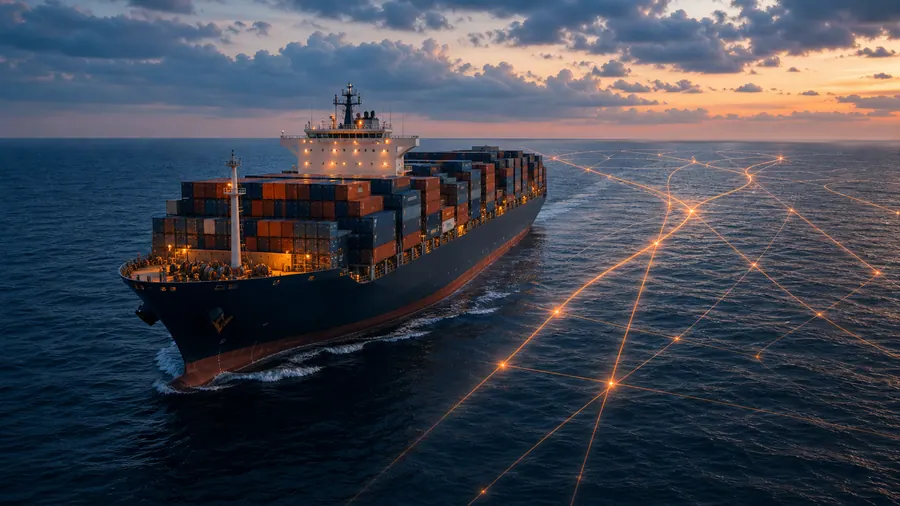
China's green logistics projects are reshaping the Asia-Pacific supply chain by shifting heavy equipment, clean-tech components and project cargo onto lower-carbon routes and new port hubs. For buyers of breakbulk, RoRo and out-of-gauge (OOG) freight, the change is practical rather than abstract: different ports, different vessel mixes, different documentation and different rate drivers. The projects link China's manufacturing heartlands to wind, solar, battery and electric-vehicle assembly sites across Southeast Asia, South Asia and the Middle East, and they are pulling project cargo demand toward corridors that can handle oversized loads and cleaner fuel.
What China's Green Logistics Projects Change First
China's green logistics push is not one programme. It combines port electrification and shore power, green methanol and LNG bunkering, rail-sea intermodal links, electric heavy trucks and low-carbon industrial parks. Each element changes how heavy cargo moves. A wind-turbine nacelle that once moved through a conventional breakbulk berth may now be routed through a port with heavy-lift capacity, rail access and a green bunkering hub. A battery module may need temperature-controlled storage, dangerous-goods handling and a RoRo or container route that meets carrier rules.
For shippers, the first impact is route selection. Green corridors often favour ports with larger heavy-lift cranes, deeper berths and better rail links. That can reduce handling risk for OOG cargo, but it can also concentrate demand in peak seasons. The second impact is vessel choice. Project cargo buyers are seeing more dual-fuel and methanol-ready heavy-lift vessels, but not every route has them. The third is documentation: low-carbon fuel claims, battery safety papers and port environmental permits are now part of the pre-shipment file.
The projects also create new trade lanes. Electric buses, charging infrastructure, hydrogen electrolysers and grid equipment move alongside traditional plant machinery. That mix rewards forwarders who can combine flat-rack, breakbulk and RoRo space on one booking instead of splitting the cargo across several providers.
Why Clean-Tech Cargo Is Rewriting Heavy-Lift Demand
Wind, solar and storage equipment
Wind blades, towers, nacelles and solar trackers are long, heavy and awkward. They rarely fit standard containers, so they move as breakbulk, RoRo or flat-rack OOG. China remains a major export base for these components, and Asia-Pacific projects are increasingly sourced from Chinese factories. That keeps demand high for heavy-lift vessels with long deck space and cranes rated for lifts that can exceed 100 tonnes. Solar modules are lighter but sensitive to moisture and impact; storage containers add battery safety rules. Peak project deadlines in Q3 and Q4 can tighten vessel availability, so early booking matters.
EV and battery supply chains
Electric-vehicle and battery plants in Thailand, Indonesia, Vietnam and India are pulling in production lines, presses, moulds and battery modules. These shipments mix OOG machinery with dangerous goods. Lithium batteries require UN38.3 test summaries, MSDS, state-of-charge limits and carrier approval. Some ports restrict battery storage, so the forwarder may need a transhipment plan or a direct RoRo service. The result is a more complex cargo file and a shorter list of suitable vessels.
How the Supply-Chain Map Is Redrawing Around Green Corridors
Rail, short-sea and RoRo options
China-Europe rail is not the main story for Asia-Pacific, but China-Southeast Asia rail links and short-sea feeders matter. They can cut transit time for urgent project components and reduce road congestion at border crossings. RoRo remains strong for wheeled machinery, trucks and trailers, especially where roll-on ramps and yard space are available. Breakbulk is still the workhorse for very heavy or very long pieces. Buyers should compare door-to-door time, not just port-to-port time, because green corridor projects often add inland rail or barge legs.
Ports investing in green bunkering and electrification
Ports in Singapore, Shanghai, Ningbo-Zhoushan, Busan and major Southeast Asian hubs are investing in cleaner bunkers, shore power and electric yard equipment. This does not automatically lower project cargo rates. It can raise port charges where infrastructure costs are recovered, and it can tighten berth windows during upgrades. But it also creates more predictable environmental compliance and better heavy-lift handling in the long run. Shippers should ask whether a port's green upgrade affects crane availability, dangerous-goods storage or berth draft.
What This Means for Breakbulk, RoRo and OOG Buyers
Rate factors to watch
There is no single green premium or discount. Breakbulk and RoRo rates are driven by cargo dimensions, weight, centre of gravity, lifting points, vessel type, route, season, fuel surcharges, port congestion, escort and permit costs, transhipment and insurance. A green corridor may offer lower fuel risk but higher port charges. A direct heavy-lift sailing may cost more than a transhipment but reduce handling damage risk. Quotes often use per revenue ton, per cubic metre or lump-sum project pricing, so compare the scope: does it include lashing, cribbing, port storage, customs and survey?
Transit-time ranges and routing
Typical breakbulk and RoRo transit times from central China ports to Southeast Asia range from about 12 to 25 days, depending on direct sailing, feeder connections and port rotation. To Middle East hubs, allow roughly 25 to 40 days for breakbulk or RoRo, with longer windows for transhipment and OOG permits. To South Asia, plan around 18 to 32 days. These are planning ranges, not guarantees; weather, berth congestion, carrier schedules and customs can add a week or more. Add inland transport and pre-shipment survey time before you promise a delivery date.
Documentation, Packing and Insurance Checklist
Documentation
Prepare the bill of lading or sea waybill, commercial invoice, packing list, certificate of origin and any import permits. For wood crates, include ISPM 15 heat-treatment marks. For batteries, include UN38.3, MSDS, dangerous-goods declaration and carrier approval. For OOG cargo, provide accurate dimensions, weight, centre of gravity, lifting points and a stowage or lift plan. Port authorities may also ask for heavy-lift permits, road escorts and environmental clearances. In green corridor projects, keep fuel or emissions documentation if the buyer requires it.
Packing and crating
Seaworthy packing is the cheapest insurance you can buy. Use ISPM 15-treated timber, closed crating for sensitive electronics, vapour barriers for humidity, and shock indicators for precision machinery. Mark lifting points and centre of gravity clearly. For OOG pieces, build a cradle or skid that spreads load and allows safe lashing. Protect machined surfaces, seal openings and brace internal components. Photograph the cargo before and after packing; those images matter if a damage claim arises.
Port handling and insurance
Confirm crane capacity, berth draft, yard space and RoRo ramp limits before booking. Check whether the port can store dangerous goods and whether heavy-lift equipment is available on the same shift. Arrange a pre-shipment survey for high-value or complex cargo. Buy all-risk project cargo insurance that covers the full door-to-door journey, including loading, transhipment and inland legs. Check exclusions for inadequate packing, rust and delay. If the cargo is critical to a plant start-up, ask about delay-in-start-up cover.
How to Plan a Lower-Risk Green Corridor Shipment from China
Start with the cargo, not the route. Measure and weigh every piece, identify the heaviest lift and the longest item, and confirm whether any battery or dangerous-goods rules apply. Then shortlist ports that can handle the lift and the storage. Compare direct breakbulk, RoRo and transhipment options on door-to-door time and handling count. Build a documentation pack early, book survey and insurance before packing, and keep a buffer for port congestion. For China-origin project cargo moving to Asia-Pacific, the Middle East, Africa or South Asia, Halogis aligns vessel space, port permits, packing and inland transport before the cargo leaves the factory.
FAQ
Are China's green logistics projects only about electric trucks?
No. They include port electrification, green bunkering, rail-sea intermodal links, low-carbon industrial parks and cleaner heavy-lift vessels. Each changes route choice, port handling and documentation for project cargo.
Do green corridors always reduce breakbulk rates?
Not necessarily. They can lower fuel risk and improve port efficiency, but port upgrades, permits and concentrated demand can raise costs. Compare lump-sum quotes on scope, not headline rate.
What documents are critical for battery equipment?
UN38.3 test summaries, MSDS, dangerous-goods declaration, state-of-charge confirmation and carrier approval are essential. Add import permits and port storage approvals where required.
Send the dimensions and the lane. A planner will come back with options.