

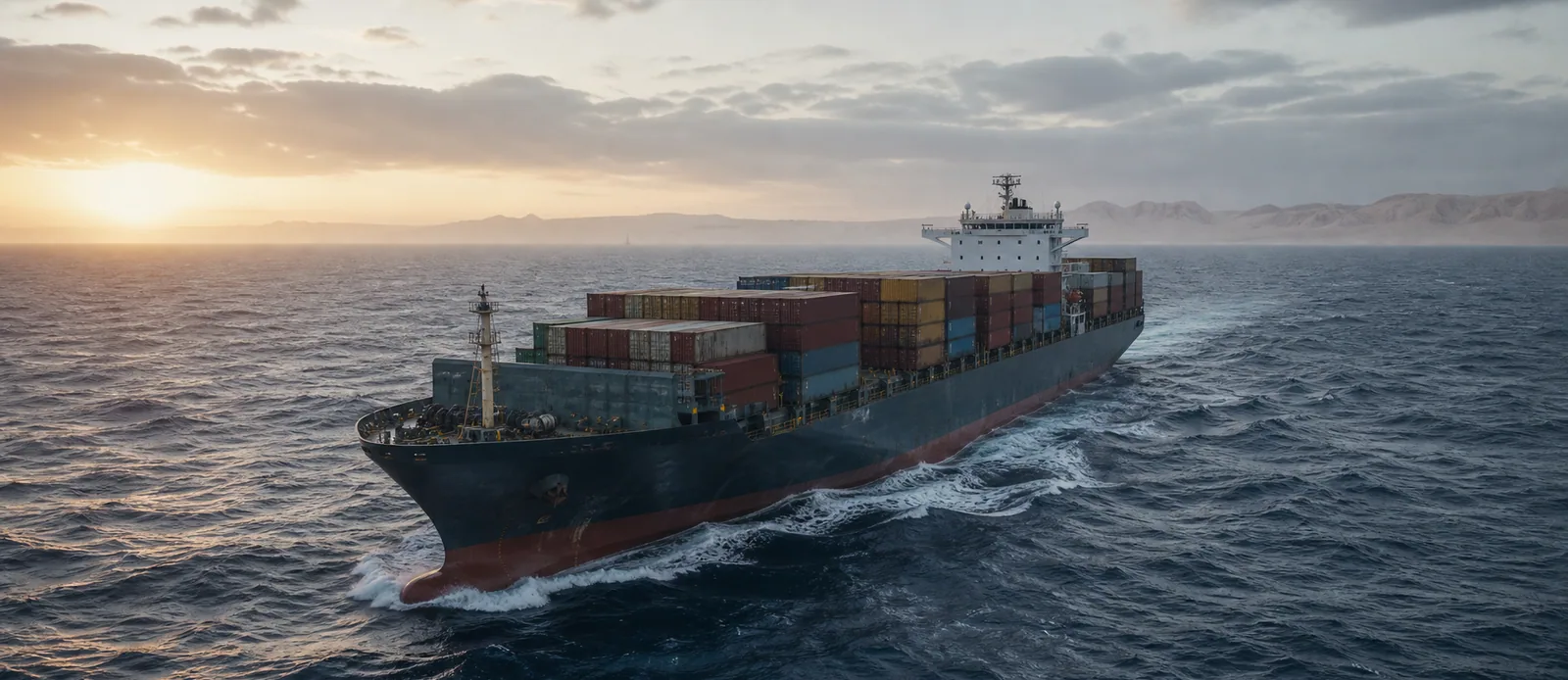
Chokepoint risks make logistics planning central to project cargo routing because a single disruption at a strait, canal or transshipment hub can reset transit times, crane windows and charter costs for breakbulk, RoRo and OOG cargo moving from China to the Middle East, Africa and South Asia.
Why chokepoints matter more for project cargo than container freight
Container lines can blank a sailing, swap a vessel or absorb a diversion across thousands of TEU. Project cargo does not have that luxury. A 180-tonne transformer, a 60-metre nacelle or a 400-tonne reactor module needs a specific vessel, a certified lift plan, a port with enough quay strength and a road route cleared for axle loads. When a chokepoint closes or becomes a war-risk zone, the planner cannot simply re-book the next box slot. The cargo may wait weeks for the right heavy-lift ship, a new permit or a revised stowage plan.
That is why chokepoint risk is not a trading-desk headline for project buyers; it is a routing variable. It sits alongside crane capacity, draft, air draft, port storage and inland clearance. The earlier it is modelled, the more likely the shipment arrives inside the construction window rather than holding up a substation, refinery or wind farm.
The chokepoints that shape China-to-Middle East, Africa and South Asia routings
For shipments leaving Chinese load ports such as Shanghai, Tianjin, Qingdao, Guangzhou and Zhangjiagang, the main risk nodes are well known but rarely interchangeable:
- Strait of Malacca and South China Sea: the default gateway for South Asia, the Gulf and Europe. Congestion, weather and security incidents can add days before the vessel even reaches the Indian Ocean.
- Bab el-Mandeb and the Suez Canal: the shortest path from Asia to the Mediterranean, North Africa and Europe. Red Sea security disruptions have pushed many operators to the Cape of Good Hope, adding roughly 10–14 days on Asia–Europe and Asia–Mediterranean voyages, with knock-on effects for project vessel availability.
- Strait of Hormuz: the approach to Gulf Cooperation Council ports. Any tension here affects war-risk premiums, escort requirements and schedule reliability for Jebel Ali, Dammam, Hamriyah, Sohar and Kuwait.
- Cape of Good Hope: the main contingency for Red Sea avoidance. It is reliable but slower, rougher and more fuel-intensive, which matters for open-deck RoRo and breakbulk stowage.
- Transshipment hubs such as Colombo, Singapore, Jebel Ali and Port Said: a chokepoint can be a hub rather than a strait. Missed connections and yard congestion can strand OOG cargo that needs a specific feeder or crane.
For Africa, the choice between Suez and the Cape is not just a distance calculation. It changes port rotation, bunker exposure, weather risk and the availability of heavy-lift tonnage. For South Asia, a Malacca disruption may push planners toward direct calls or alternate hubs, but only if the receiving port can handle the cargo.
How chokepoint risk changes route planning for breakbulk and RoRo
Route surveys and port capability checks
A credible project routing starts with a route survey, not a rate request. The planner checks: Can the load port lift the piece with its own crane or does it need a floating crane? Is the discharge quay strong enough for the out-of-gauge footprint? Is there air draft for a RoRo ramp or a heavy-lift mast? Can the inland road handle the axle load, and are there bridges, tunnels or overhead lines that require permits or escorts? A chokepoint diversion is only useful if the alternate port passes these checks.
Schedule buffers and laycan strategy
Project cargo schedules should carry explicit buffers: 7–14 days for Red Sea or Malacca disruption on longer voyages, plus port congestion allowance at both ends. Laycan windows should be wide enough to let the operator swap in a sister vessel without breaching the charter party. Buyers who fix a narrow delivery date without a buffer are effectively betting that no chokepoint will flare up.
Transshipment and fleet flexibility
Direct calls reduce handling risk but may not be available for every OOG piece. Where transshipment is unavoidable, the planner should nominate two feasible hubs, confirm crane capacity and storage at each, and check whether the receiving port can accept a substitute vessel. In tight heavy-lift markets, flexibility on load port and vessel type can be worth more than a marginally lower headline rate.
Rate factors and transit-time ranges buyers should budget for
There is no single project cargo rate from China to the Middle East, Africa or South Asia. Quotes are built from the shipment, the route and the risk profile. The main cost drivers are:
- Vessel and gear: heavy-lift breakbulk, multi-purpose vessel, RoRo or flat-rack/container solution; crane capacity, deck space and stowage position.
- Port handling: lift-on/lift-off, floating crane, stevedoring, lashing, cribbing, storage and wharfage.
- Route risk: war-risk premiums, canal fees, Cape deviation, convoy or escort costs, weather routing.
- Inland and permits: heavy-haul trucking, road surveys, police escort, bridge strengthening, port authority approvals.
- Documentation and insurance: project cargo all-risk cover, delay-in-start-up cover if required, certificates and inspection costs.
As a planning range, breakbulk and RoRo project shipments from China to Gulf ports typically move in 20–35 days port-to-port, depending on direct call, transshipment and weather. China to East or West Africa commonly runs 30–45 days, and China to South Asia 18–30 days. Add 10–14 days for a Cape routing and additional port congestion allowance during peak project seasons. Rates can swing by 20–40% between a direct heavy-lift call and a transshipped or deviated routing, so the cheapest quote is rarely the most resilient.
Documentation, packaging and insurance controls that protect the routing
Chokepoint planning fails at the documentation desk as often as at sea. A project file should include the commercial invoice, packing list, bill of lading or sea waybill, certificate of origin, fumigation certificate where applicable, MSDS for batteries or dangerous goods, lift plan, stowage plan, lashing calculations and any import permit or pre-shipment inspection certificate required by the destination.
Packing and crating deserve the same attention. Heavy or OOG cargo should be seaworthy, braced and clearly marked with centre-of-gravity and lifting points. Weather protection matters on Cape routings and open-deck stowage. Insurance should be placed before cargo leaves the factory, with cover that matches the Incoterms, the route and any transshipment. Project cargo all-risk policies should be checked for chokepoint-related exclusions, war-risk clauses and delay-in-start-up cover.
Building a chokepoint-ready project logistics plan
The practical answer is to treat chokepoints as a standing agenda item. Build a risk register for each shipment: chokepoint, trigger indicator, impact on transit time, alternate port, alternate vessel and cost implication. Confirm port handling at both origin and destination before booking. Book heavy-lift tonnage early, especially for OOG pieces that cannot be broken down. Keep a contingency budget for deviation, storage and re-stowing. Monitor security advisories, canal transits and carrier routings weekly, not on the day of sailing.
For buyers moving heavy equipment from China to the Middle East, Africa and South Asia, a forwarder such as halogis.com should be able to show the route logic, not just a price. The right plan names the primary and alternate chokepoint routings, the port capability checks, the documentation set and the insurance position. That is how logistics planning becomes central to project cargo routing rather than a postscript to it.
FAQ
Which chokepoint affects China–Middle East project cargo most?
The Strait of Hormuz and the Bab el-Mandeb–Suez corridor are the most consequential for Gulf and Red Sea ports. Malacca matters for South Asia and for vessels routing onward to the Gulf.
How much buffer should I add for Red Sea disruption?
For project cargo, plan at least 7–14 days of schedule buffer on affected voyages, and confirm that the charter party allows a wide enough laycan to absorb a Cape routing or vessel substitution.
Can transshipment reduce chokepoint risk?
Sometimes, but it adds handling risk. Transshipment helps only when both hubs have confirmed crane capacity, storage and a reliable feeder; otherwise a direct call or a different load port is safer.
Send the dimensions and the lane. A planner will come back with options.