

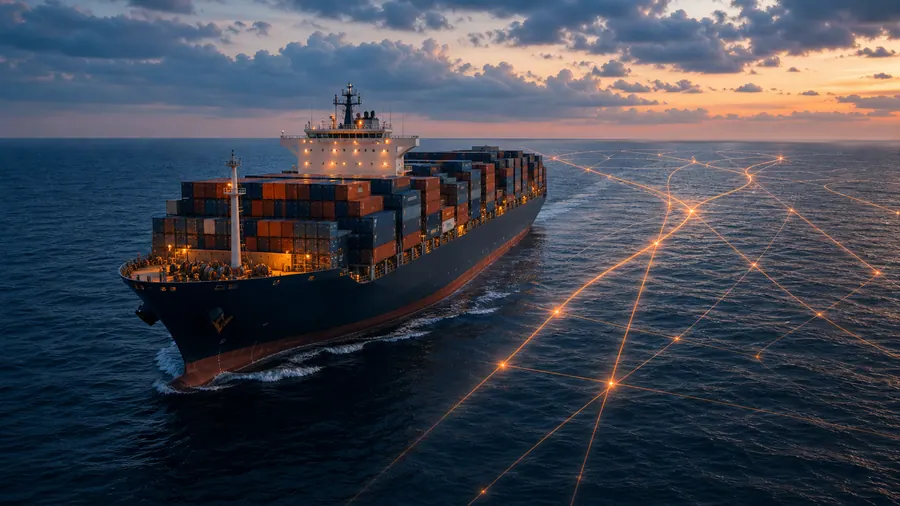
Funding cuts to offshore wind monopile projects are already reshaping project cargo supply chains, because they remove some of the heaviest and most schedule-critical cargoes from the breakbulk and heavy-lift market while freeing up vessels, berths and fabrication slots that must now be redirected into other trades, including the China–Middle East, Africa and South Asia lanes.
Why offshore wind funding decisions reach the freight market
Offshore wind is one of the densest sources of project cargo anywhere. A single 1 GW farm can absorb 60 to 100 monopiles, each 6 to 10 metres in diameter, 60 to 100 metres long and weighing 700 to 2,000 tonnes, plus transition pieces, towers, substation topsides, inter-array cable reels and a small fleet of installation equipment.
When a developer cancels, rebids or delays a project — usually because of power price caps, higher interest rates, permitting delays or capex inflation — the cargo does not simply vanish. It shrinks, slips by one to three years, or relocates to a market with better economics. Each outcome changes how tonnage is booked, priced and routed.
What actually moves in a monopile project
Upstream: steel and fabrication inputs
Steel plate, seamless pipe, flange rings, weld consumables and coating materials move from mills and processors into fabrication yards, largely on breakbulk and container services ex-China, Japan and Korea.
Core cargo: foundations and components
Monopiles themselves are too large for conventional multipurpose (MPP) cranes and typically move on semi-submersible vessels with float-on/float-off operations, or on heavy-lift ships with 800 to 1,600 tonne crane capacity. Transition pieces, secondary steel and towers often travel as breakbulk parcels or on deck carriers.
Downstream: installation and support equipment
Crawler cranes, SPMTs, jacking systems, piling hammers, generators, accommodation modules and temporary steel arrive as out-of-gauge (OOG) project cargo, frequently on a just-in-time basis tied to installation weather windows.
Four ways funding cuts ripple through the project cargo chain
1. Fabrication slots shift toward Asia and the Gulf
Slower European demand pushes Chinese and Southeast Asian fabricators to chase work in Saudi Arabia, the UAE, India, South Africa and Brazil. That shifts the origin ports, the export documentation and the sailing patterns that forwarders must plan around, and it shortens some routings while lengthening others.
2. Heavy-lift vessel capacity loosens
When two or three large wind programmes slip in the same quarter, semi-submersible and heavy-lift tonnage that was committed for two to three years becomes available. Owners re-position toward general project cargo: refinery and petrochemical modules, mining plant, rail stock, port cranes and power equipment.
3. Rates split by segment, not by headline
Standard breakbulk parcels on established China–Middle East and China–India services are less affected. The softening is concentrated in full-charter heavy lift, where open tonnage and reduced competition for deck space can move negotiated levels by 15–30% in either direction within a few quarters. Volatility, not a straight decline, is the real story.
4. Ports, storage yards and installation fleets feel the gap
Laydown yards built for foundation storage lose utilisation and may raise handling tariffs to cover fixed costs. Meanwhile, cancellation penalties, retention payments and milestone-based contracts become a bigger commercial risk than freight itself.
The rate factors behind a monopile or OOG quotation
- Vessel type and availability: semi-submersible vs. heavy-lift vs. MPP with deck stowage
- Lift and outreach: crane capacity at the required radius, tandem lifts, tailing arrangements
- Cargo geometry: length, diameter, centre of gravity, lifting-point certification
- Load-out scope: SPMT hire, ballasting, sea-fastening design and welding
- Port charges: wharfage, pilotage, tugs, berth windows, overtime — typically 10–25% of total door-to-site logistics cost
- Route and fuel: bunker adjustment factors, canal tariffs, weather routing and monsoon or typhoon avoidance
- Insurance and surveys: all-risk project cargo cover, pre-shipment and loading surveys
Realistic transit times from China
Indicative port-to-port ranges for project cargo ex-Shanghai, Ningbo, Qingdao or Tianjin: Jebel Ali 22–30 days on direct breakbulk, 25–35 days for heavy lift with weather routing; Dammam and Jubail 25–35 days; Mundra and Nhava Sheva 18–28 days; Mombasa and Dar es Salaam 30–45 days; Lagos, Tema and Abidjan 40–60 days. Add 5–10 days for float-on/float-off operations, waiting on weather or staging at a transshipment hub.
Documentation, packing and insurance
Documents
Commercial invoice, packing list, certificate of origin, mill test certificates, general arrangement and dimensional drawings, lifting and rigging plans, stowage and lashing plan aligned with the IMO CSS Code Annex 13, load-out and sea-fastening survey reports, and an all-risk insurance certificate. Destination markets may also require attested or legalised documents, SASO/SABER registration in Saudi Arabia, and pre-shipment inspection in several African states.
Packing and securing
Purpose-built steel cradles, VCI wrap, desiccants, shock and tilt indicators, DNV-certified lifting lugs, ISPM 15 treated timber where wood is used, and lashings designed by an approved engineer rather than copied from a previous shipment. Heavy items should sit on stools that allow SPMT access at both ends.
Insurance
Buy project cargo all-risk cover with a warehouse-to-foundation duration clause, not a port-to-port one, and confirm sub-limits for heavy lifts, deductible per conveyance, and whether delay-in-start-up cover is included. Under-declared values are the most common cause of disputed claims on wind components.
How buyers of heavy equipment logistics should respond
- Rebid heavy-lift contracts while tonnage is loose, but avoid locking two-year commitments into a volatile market.
- Ask for open-book port charges so you can separate fixed costs from freight.
- Build schedule float around weather windows and possible programme delays.
- Consider part-charter or space-sharing to protect capacity without full-charter cost.
- Screen counterparties for payment security — milestone structures protect forwarders and shippers alike.
FAQ
Do monopile funding cuts lower project cargo rates?
They loosen capacity in the heavy-lift and semi-submersible segment, which can soften negotiated rates by 15–30% on some routes within a few quarters. Standard breakbulk and container rates are far less affected, and demand from mining, energy and infrastructure can absorb the gap quickly.
How long does it take to ship monopiles from China to the Middle East?
Typically 25–35 days port to port on heavy-lift or semi-submersible tonnage with weather routing, against 22–30 days for conventional breakbulk parcels on the same trade lane.
What documentation is required for oversized wind components ex-China?
Invoice, packing list, certificate of origin, mill certificates, lifting and lashing plans, survey reports and an all-risk insurance certificate, plus destination-specific attestation, SASO/SABER registration or pre-shipment inspection where applicable.
Halogis quotes breakbulk, RoRo, OOG and full project cargo from Chinese ports to the Middle East, Africa and South Asia, with in-house lifting plans and sea-fastening coordination on every booking.
Send the dimensions and the lane. A planner will come back with options.