

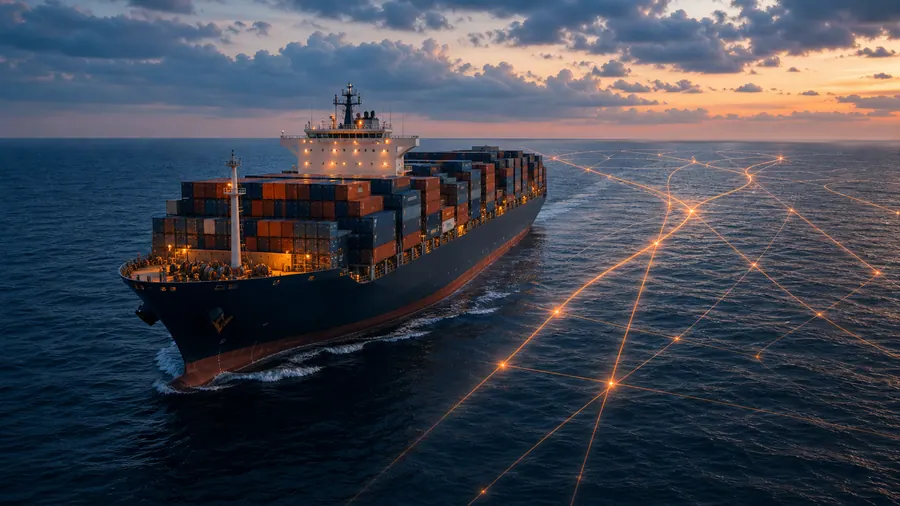
New Pasaia crane capacity expands the Spanish port’s ability to handle heavier, larger and more complex project cargo, which gives shippers of breakbulk, OOG and heavy equipment another Atlantic gateway to compare against Bilbao, Antwerp and Rotterdam.
What the new Pasaia crane capacity changes
Pasaia’s upgraded shore crane capacity is not a niche port detail. For heavy-cargo buyers, crane lift envelope, hook height, outreach and lifting speed determine whether a port can discharge a transformer, excavator, crane component or oversized module without a floating crane, extra barges or a long berth stay. More capable shore cranes can reduce the number of separate lifts, shorten port time and lower the risk of weather delays during hook-up and discharge.
The practical effect is that Pasaia can compete for project parcels that would previously have been routed through larger Iberian or Northern European hubs. That does not make it a universal replacement for Antwerp or Rotterdam. It does make Pasaia a credible comparison point when the final destination is Spain, southern France or a feeder route into the Mediterranean and West Africa.
Why Pasaia matters in China-Europe heavy cargo routings
Pasaia sits on Spain’s Basque Atlantic coast, close to industrial customers in northern Spain and southwestern France. For China-origin heavy equipment, the port can work as a direct or transshipped discharge point, followed by road, rail or short-sea movement. Direct China calls are service-dependent, so many project parcels will still connect through a larger European hub before final delivery. The value of new crane capacity is that it improves the final leg: less reliance on port-owned or third-party floating crane spreads, faster discharge and a wider choice of inland hauliers.
For cargo ultimately bound for the Middle East, Africa or South Asia, Pasaia is usually a European staging or consolidation point rather than the main ocean leg. It matters when a European supplier, service depot or assembly site feeds a project in those regions, or when congestion at Mediterranean hubs makes an Atlantic option useful. From a China forwarder’s perspective, Pasaia belongs in the routing review alongside Bilbao, Valencia, Barcelona, Antwerp and Rotterdam.
Which cargoes benefit most from Pasaia crane capacity
Breakbulk and heavy machinery
Wheeled and tracked machinery, skid-mounted equipment, steel structures and industrial packages benefit when shore crane capacity can handle the unit without dismantling. Fewer dismantling hours mean lower labour, less re-assembly risk and faster handover.
OOG and project cargo
Over-dimensional cargo with high centre of gravity, long tail swings or tandem-lift requirements needs a documented lift plan. New crane capacity helps only if the load can be rigged within the crane’s load chart at the required radius. Buyers should send exact dimensions, weights, lift points and centre-of-gravity data before assuming a port can handle the parcel.
RoRo and hybrid moves
For machinery that can roll, RoRo remains efficient. For units that roll but need a crane-assisted lift at the destination, Pasaia’s added capacity can support hybrid RoRo and breakbulk solutions, especially when ramps or vessel schedules are constrained.
Port handling, packing and documentation
Heavy-cargo risk is usually decided before the vessel arrives. A pre-arrival lift plan should confirm crane model, lifting gear, spreader or sling configuration, ground-bearing pressure, laydown area and storage location. Packing should use heavy-duty timber crating, steel skids, shock logs and weatherproofing; wood packaging should meet ISPM 15. Machinery may need VCI protection and secure bracing to prevent movement during ocean transit.
Core documents include the bill of lading, commercial invoice, packing list, certificate of origin, insurance certificate and a dimension and weight schedule. Project cargo should also carry lift-point diagrams, centre-of-gravity data, crane and rigging plans, and any permits for abnormal road loads. If the cargo is dangerous or has batteries, fuel or lubricants, declare it early.
Insurance should cover marine cargo all-risk, loading and discharging, and project delays where relevant. Confirm whether the seller or buyer is responsible for port handling under the Incoterms rule, and check the forwarder’s liability limits against the cargo value.
Rate factors and transit-time ranges
There is no published per-container rate for breakbulk, OOG or project cargo. Pricing is quotation-based and driven by dimensions, weight, lift points, vessel type, crane surcharge, port stay, storage, inland permits and escort requirements. Fuel, seasonal demand, congestion and transshipment also move the number. Expect a wide spread between a small skid and a multi-piece project parcel; do not treat a container rate as a benchmark.
Transit time from China to Pasaia typically falls in a broad 30 to 55 day range depending on direct or transshipped service, vessel speed, port rotation and heavy-lift scheduling. Project parcels may wait for a suitable heavy-lift vessel, so schedule buffer matters more than the nominal sailing time.
How to compare Pasaia with other heavy-cargo ports
Use the same scorecard for Pasaia, Bilbao, Valencia, Antwerp and Rotterdam: maximum lift at the required radius, berth draft and length, storage square metres, road permit lead time, crane availability during the discharge window, and the cost of any floating crane or barge support. Add the inland leg: motorway clearances, bridge limits, escort rules and delivery distance to the factory or project site. A port with a larger crane can still be the wrong choice if the last mile needs dismantling or a long permit cycle.
For China-origin parcels, also compare sailing frequency, transshipment risk and free time. Pasaia’s advantage is strongest when the discharge port is close to the final Iberian site and the lift fits the available shore crane chart. It is weaker for ultra-heavy parcels that need a dedicated heavy-lift berth or a floating crane that the port cannot guarantee.
What to ask before booking through Pasaia
Ask your forwarder to confirm the crane capacity at the actual berth, the load chart at the required radius, hook height and outreach, storage limits, road permits and the availability of qualified riggers. Confirm whether the vessel has gear and whether a floating crane would still be needed. For China-origin cargo, check the transshipment plan, free time, demurrage and the contingency port if Pasaia is congested.
Risks and limits
New crane capacity improves capability but does not remove physical limits. Ultra-heavy or very long cargo may still need a larger hub, a floating crane or a specialist vessel. Weather, tide, draft, berth availability and land storage can constrain a compact port. Buyers should verify each lift rather than assume that a port investment covers every OOG shape.
FAQ
Does new Pasaia crane capacity lower heavy-cargo rates?
It can improve competition and reduce floating-crane or extra-lift costs, but ocean freight, cargo dimensions and schedule dominate the total. Savings are case-by-case, not automatic.
Can Pasaia handle OOG project cargo from China?
Yes, if the lift plan is approved against the crane’s load chart and port storage and road permits are confirmed. Transshipped parcels need extra schedule buffer.
What documents should be ready?
Prepare the bill of lading, invoice, packing list, certificate of origin, insurance certificate, weight and dimension schedule, lift-point diagrams and any abnormal-load permits.
Send the dimensions and the lane. A planner will come back with options.