

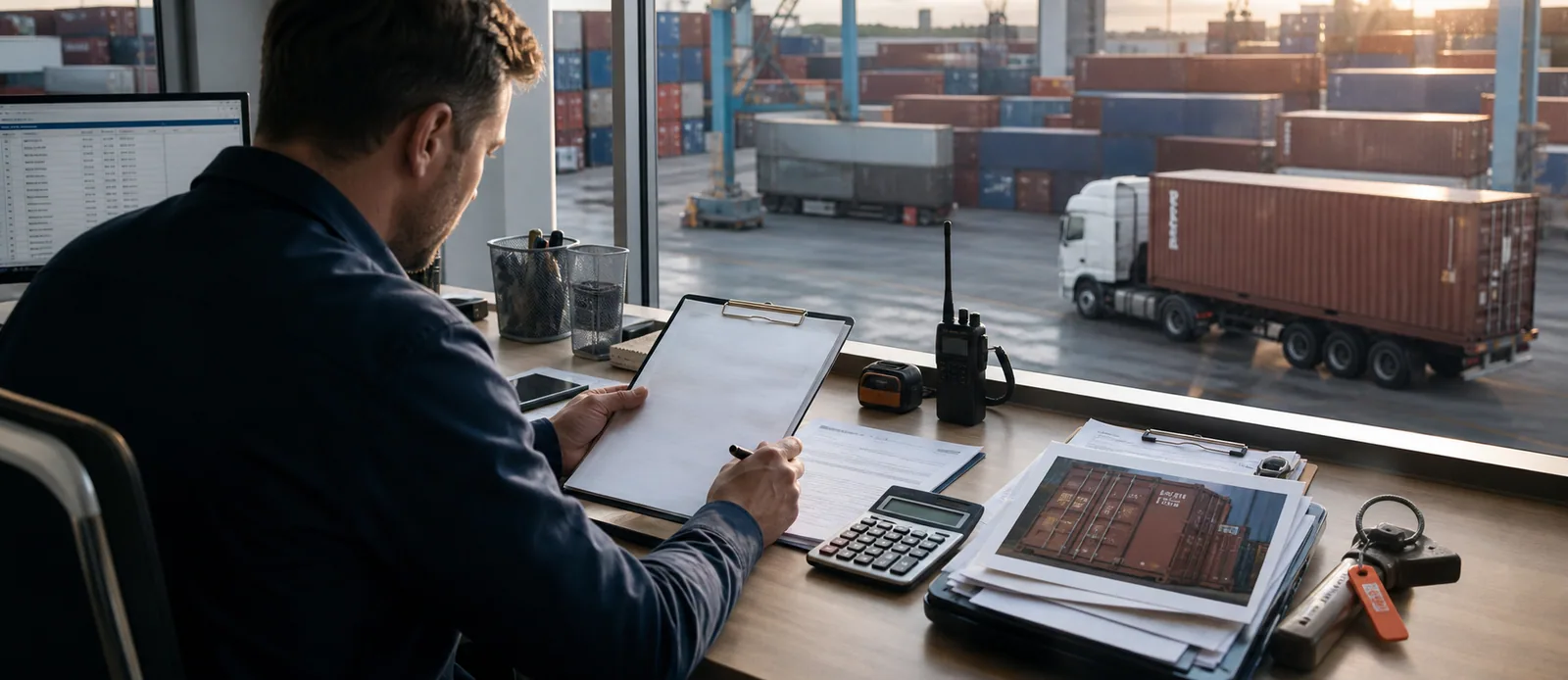
Customs officers clear documents, not cargo. The physical goods move when the paperwork set is complete and consistent. Most terminal storage bills are document failures in disguise — and almost all of them trace to the same short list.
The core set
Commercial invoice with correct Incoterm and currency; packing list with piece marks matching the bill of lading; bill of lading or air waybill; certificate of origin matching the invoice and HS code; export declaration at origin; import declaration at destination. Insurance certificate where the Incoterm assigns it to the buyer.
The cargo-specific additions
Machinery: technical specification sheets, sometimes safety certifications. Steel: mill test certificates. Chemicals: safety data sheets and, in many jurisdictions, registration numbers. Wood packaging: ISPM-15 heat treatment marks on every crate — the most common physical inspection failure in the trade. Pre-shipment inspection certificates where the destination requires them.
The three that fail most
First, the invoice–packing list mismatch: quantities or piece marks that disagree between documents stop clearance for reconciliation. Second, the origin certificate: wrong exporter name, wrong port of loading, or an HS code that differs from the declaration — any one denies the preference rate. Third, ISPM-15: a single untreated pallet flags the whole consignment for treatment and re-inspection at destination cost.
The consistency rule
Every document repeats a subset of facts. The exporter name, consignee, marks, quantities, weights and codes must agree across all of them. We reconcile the set against the physical tally before cut-off, which is why our clearance file passes first-time at the strict ports — Lagos, Chittagong, Karachi — where a resubmission costs days.
Timing
Pre-declare where the destination allows it. Documents sent after departure arrive as the container is opening; documents sent with the booking arrive before the officer asks. The second option is measurably cheaper.
Send the dimensions and the lane. A planner will come back with options.