

Heavy-lift safety standards can affect project cargo insurance by shaping underwriting decisions, policy conditions and the evidence required after a loss. For buyers shipping cranes, transformers, industrial machinery or other oversized equipment from China, the practical priority is to show that lifting, securing and transport were planned and performed by qualified people using suitable equipment.
There is no single new global standard that automatically changes every cargo policy. Requirements may come from national regulations, port rules, recognized technical standards, contract specifications or an insurer’s own risk controls. Understanding which requirements apply—and keeping proof that they were followed—can help prevent avoidable delays, coverage disputes and cargo damage.
What heavy-lift safety standards cover
Heavy-lift work involves more than choosing a crane with enough rated capacity. A lift plan should address the cargo’s verified weight, dimensions, center of gravity, designated lifting points, rigging arrangement and the crane’s configuration at the planned working radius. It should also consider ground or quay capacity, obstructions, weather limits, communication between the lift team and safe exclusion zones.
Applicable rules vary by country and operation. A project may reference recognized standards for crane operation, inspection or wire-rope care, while local law sets mandatory duties for employers and lifting contractors. Ports, terminals and project owners may add requirements of their own. The shipper should confirm the governing requirements with its lifting contractor, terminal and insurer rather than assume that one certificate satisfies every party.
Why insurers pay attention to lifting controls
Project cargo insurers assess the likelihood and potential severity of loss across the journey. A dropped load during factory loading, a damaged lifting lug, improper lashing or a shift at sea can lead to expensive repairs, schedule disruption and consequential project costs that may not all be covered under a cargo policy.
Evidence of sound planning can help an underwriter understand the risk. Depending on the cargo and route, the insurer may ask for drawings, packing details, lift plans, equipment inspection records, survey reports or information about the vessel and handling method. Higher-risk shipments may require a pre-shipment survey, attendance at loading or specific policy warranties. These are not universal conditions: they should be confirmed in writing for the particular placement.
Meeting a safety standard does not guarantee a lower premium, nor does a procedural gap automatically mean a claim will be rejected. The policy wording, applicable law, facts of the loss and any agreed conditions matter. Ask the broker or insurer to clarify requirements before cargo is dispatched, especially if the project has unusual lifting points, multiple transshipments or limited access at the delivery site.
Documents to prepare before cargo leaves China
A complete shipment file helps align the factory, freight forwarder, lifting contractor, carrier, terminal and insurer. Prepare and share relevant records early, allowing time to resolve discrepancies before booking or loading.
- Cargo particulars: confirmed gross weight, dimensions, center of gravity, lifting points, handling instructions and any restrictions on tilting or stacking. Check that the details match the final packing list and shipping documents.
- Lift and method statements: a task-specific plan showing crane capacity at the working radius, rigging selection, sling angles, spreader beams where needed, sequence of operations, communications and weather limits.
- Competence and equipment records: relevant operator and rigger qualifications, crane inspection or test records, and identification of lifting accessories. Requirements depend on local law, site rules and the agreed project standard.
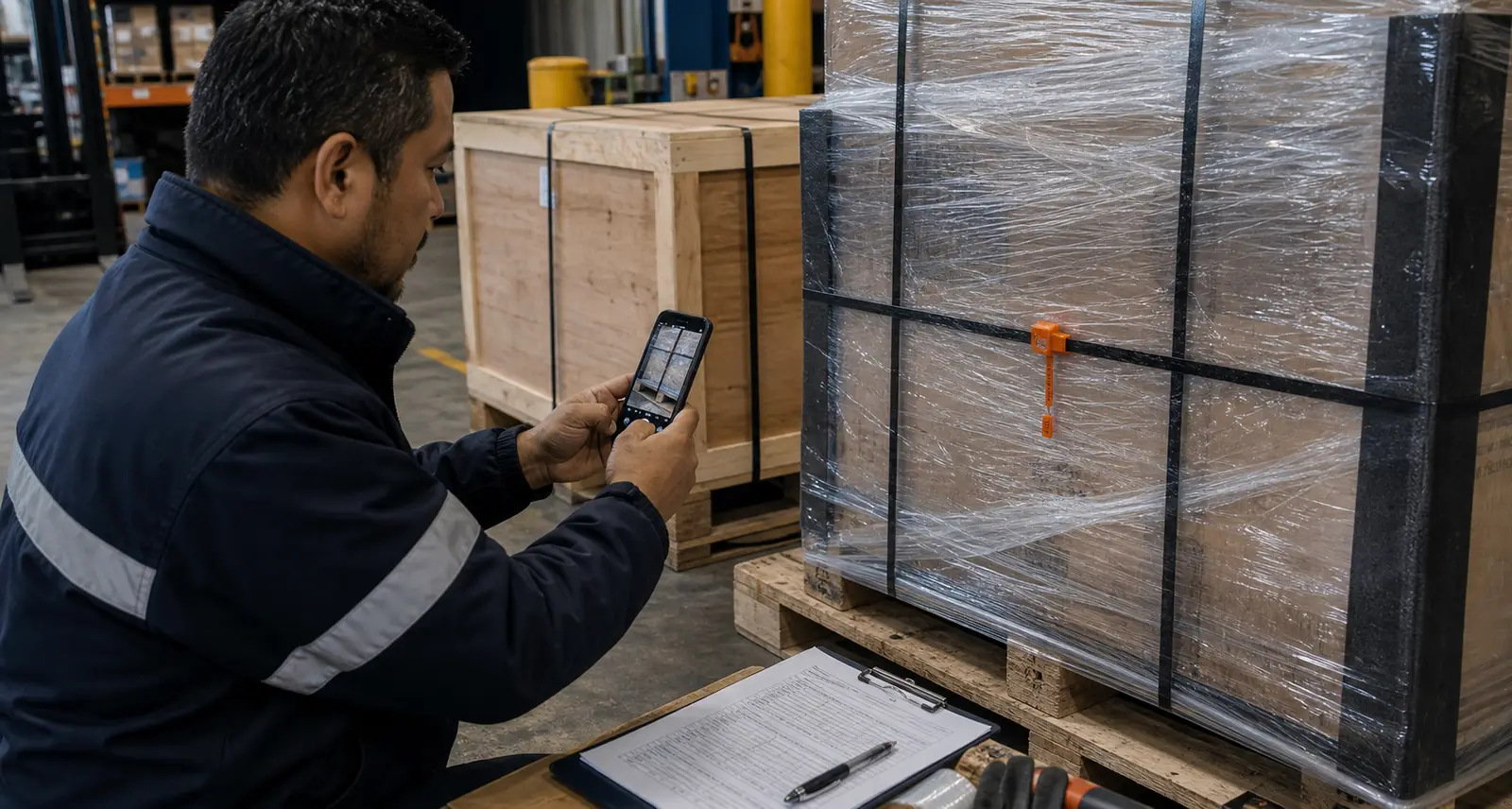
- Packing and securing evidence: packing specifications, timber or steel support details, blocking and bracing arrangements, lashing calculations where required, and photographs of the cargo before and after securing.
- Survey and insurance records: surveyor findings if required, the issued policy or certificate, declared cargo value, route and handling details, and written confirmation of any special conditions.
Keep versions controlled. If the final cargo weight, lifting points, crane, vessel, route or handling plan changes, circulate the revision and obtain approval where required. A plan prepared for a factory lift may not be suitable for a port lift using different equipment or geometry.
How handling and packing affect the insured risk
Heavy-lift cargo can be damaged before the sea voyage begins. At origin, confirm that the loading area can support the equipment and that the crane and rigging are suitable for the actual lift. Coordinate the lift window with the factory and terminal, and avoid improvising when cargo dimensions or access differ from the plan.
Packing should protect both the equipment and its vulnerable components through lifting, storage and ocean transport. Use engineered cradles or saddles for concentrated loads, protect machined surfaces and electrical parts, and identify approved lifting points clearly. For OOG cargo, make sure the packing and support arrangement do not obstruct safe access to slings or create unexpected pressure on the cargo. Photograph the condition and packing at key stages.
For breakbulk or project-vessel shipments, verify how cargo will be lifted aboard, stowed, blocked and lashed. For RoRo movements, confirm that the cargo or transport unit is compatible with the vessel’s ramp, deck limits and securing method. A cargo’s dimensions, weight distribution and sensitivity to vibration can influence the suitable mode as well as insurance terms.
Transit time, port handling and cost considerations
Safety controls can add planning time and handling expense, but they may reduce the risk of costly damage or an interrupted project. The freight budget may include engineering review, certified lifting gear, a surveyor, special packing, terminal handling, crane hire, storage or additional lashing. Rates depend on cargo dimensions and weight, origin access, equipment availability, vessel space, route, season, port capability and whether transshipment is involved. No single rate applies to every project shipment.
As a planning guide, ocean transit from China to parts of South Asia may take roughly 1–3 weeks, while routes to the Middle East or Africa may take about 3–7 weeks. These are broad port-to-port ranges, not delivery promises. Sailing schedules, port calls, congestion, transshipment and customs clearance can extend the total door-to-door timeline. Oversized cargo may also need extra time for permits, engineering approval, berth coordination and specialized equipment.
Ask for a quote that separates ocean freight from origin and destination handling, documentation, surveys, lifting, lashing, storage and any optional insurance. Confirm whether the quoted plan assumes direct port delivery, a particular vessel type or specific crane availability. A change in any of these assumptions can affect both cost and cover.
Choose insurance and controls for the full journey
Marine cargo insurance protects the insured cargo subject to the policy’s terms, exclusions, limits and agreed route. It is distinct from a carrier’s liability, which is generally limited and may not match the cargo’s full value. Buyers should confirm the insured value, coverage period, loading and unloading scope, transshipment arrangements, deductible and treatment of project-specific costs with their insurance adviser.
Before booking, share the cargo’s technical data and proposed handling sequence with the broker or insurer. Ask whether a survey, approved lifting contractor, particular lashing method or written notice is required. Confirm that coverage starts and ends at the intended points and that the declared value reflects the agreed basis. If the shipment includes several pieces or stages, establish how each is identified and documented.
Practical checklist for project buyers
- Confirm final weight, dimensions and lifting-point drawings with the manufacturer.
- Identify the applicable local rules, terminal requirements and project specifications.
- Approve lift plans and equipment records for each distinct lifting operation.
- Specify packing, crating, blocking and lashing appropriate to the cargo and mode.
- Send route, handling and cargo details to the insurer before dispatch.
- Retain condition photographs, survey findings and signed handover records.
Consistent planning makes it easier to demonstrate that risks were assessed and controls were applied. For buyers moving heavy equipment from China, early coordination between the supplier, logistics team, terminal and insurance adviser is more effective than trying to assemble evidence after an incident.
Frequently asked questions
Do new safety standards automatically change my insurance cover?
No. Requirements depend on the policy, location, cargo and agreed project conditions. Confirm any insurer requirements in writing before shipment.
Can a survey report guarantee a successful claim?
No. A survey can document condition and handling, but coverage depends on the policy wording and circumstances of the loss.
What is the most important document for a heavy lift?
There is no single document for every case. A task-specific lift plan supported by accurate cargo data and equipment records is a practical starting point.
Send the dimensions and the lane. A planner will come back with options.