

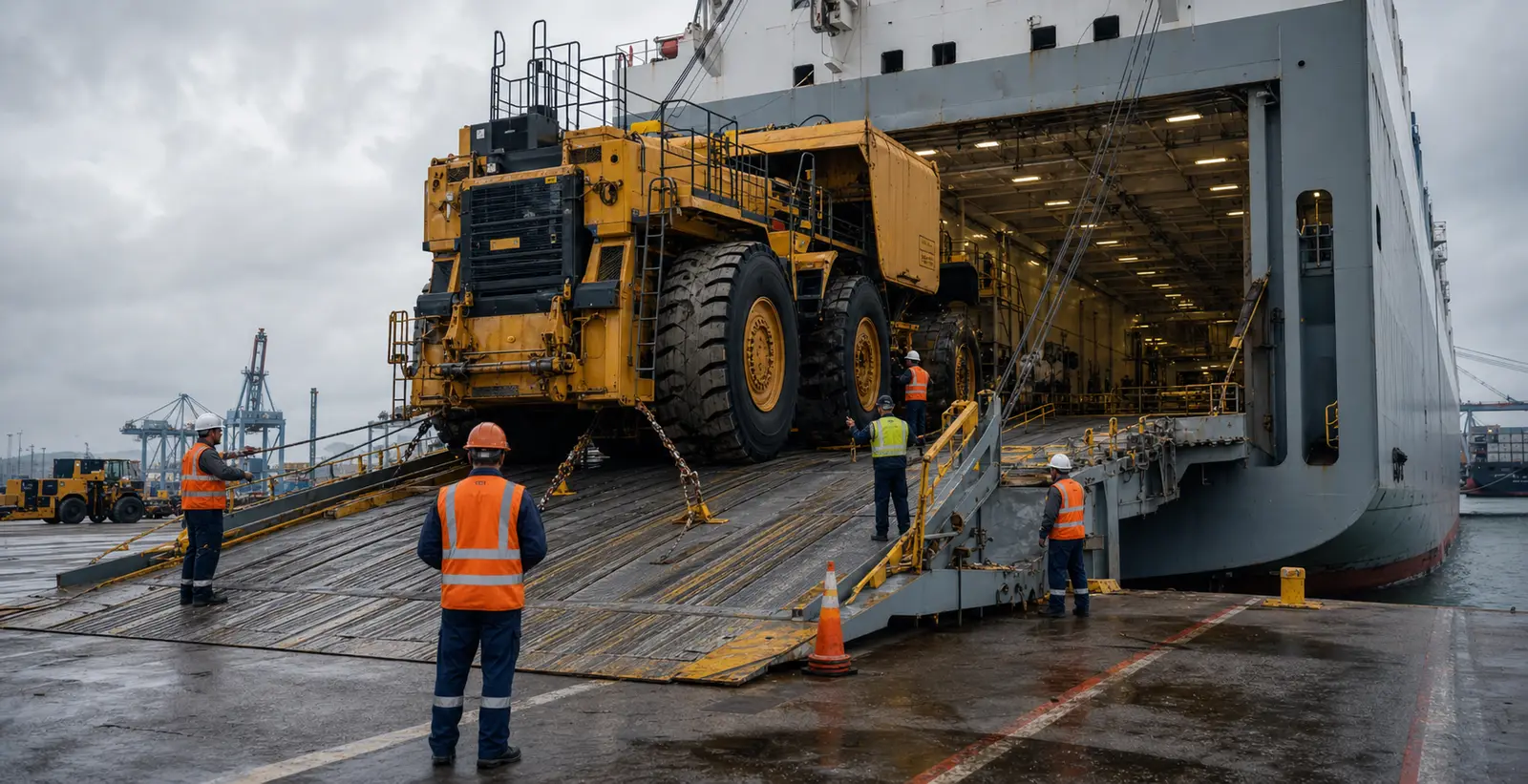
Heavy-lift shipping assurance is the process of checking that cargo data, engineering documents, lift plans and transport arrangements work together before a heavy item is moved from the factory to its destination. For buyers shipping machinery, transformers, vessels or industrial modules from China, this coordination helps prevent unsafe lifts, missed vessel cut-offs, avoidable port charges and damage during international transport.
What shipping assurance covers
Assurance is not a single certificate or a promise that cargo will arrive without incident. It is a documented review of the cargo, handling method and interfaces between parties: shipper, freight forwarder, lifting contractor, terminal, carrier and consignee. The review checks whether the item can be lifted, moved, loaded, secured and discharged using the equipment and limits available along the route.
That matters particularly for breakbulk, RoRo and out-of-gauge shipments. A cargo may be within a vessel’s weight limit but still be unsuitable for a particular crane, trailer, ramp, quay or lifting point. A complete review identifies those constraints before equipment is booked and the cargo reaches the port.
Which engineering documents should be prepared
Cargo drawings and verified data
Start with a current general arrangement drawing and a cargo data sheet. These should state the overall length, width and height, gross weight, lifting orientation, centre of gravity, support points and any parts that can be removed for transport. Include projections such as pipes, control panels and temporary braces, as well as the dimensions of the cargo in its packed condition.
Weight and centre-of-gravity data need a traceable basis, such as a manufacturer’s certified calculation or a verified weighing record. An estimate can lead to an incorrect crane selection or uneven sling loading. Mark the centre of gravity and lifting points on the drawing, and flag any uncertainty for engineering review rather than treating assumed values as confirmed.
Lifting-point and rigging evidence
Provide lifting-lug drawings, material specifications, weld details and inspection or test records where applicable. The documents should identify each lug’s permitted load and direction of loading. If the lift uses a spreader beam, slings, shackles or other loose gear, provide its configuration, working load limits and certification status. The rigging arrangement must suit both the cargo geometry and the planned lift, not just the cargo’s total weight.
Packing, support and sea-fastening details
Engineering information should explain how the cargo will be supported in storage and during transport. Skids, cradles and blocking need to distribute loads without crushing or distorting the equipment. For breakbulk or deck stowage, provide a sea-fastening concept that shows restraint points, lashing directions, materials and the assumptions used for transport loads. Final securing arrangements may need approval by the carrier or its appointed surveyor.
Keep shipping marks, package numbers and lifting instructions consistent across drawings, packing lists and physical cargo. For equipment vulnerable to moisture, corrosion or impact, specify the protection method, inspection access and any tilt or shock indicators required. The packing design should also allow safe access to lifting points and avoid blocking labels or inspection areas.
What a practical lift plan needs to show
A lift plan turns engineering information into a sequence that the site and port teams can execute. It should name the cargo, identify the lift location and describe the planned operation from pick-up to set-down. Include the lift weight, centre of gravity, crane configuration, operating radius, boom or hook arrangement, rigging geometry, sling angles and the expected load on each lifting point.
The plan should demonstrate that the crane has sufficient capacity at the actual radius and configuration, with the required operating margin under the applicable rules. It should also identify ground-bearing pressures or quay limits, outrigger arrangements, access constraints, nearby structures, weather limits and exclusion zones. A lift plan based only on the crane’s headline capacity is not enough; capacity can change substantially with radius, boom length and setup.
Assign clear responsibilities for the lift supervisor, crane operator, riggers, signaler and any independent checker. State the communication method, pre-lift inspection steps, stop-work conditions and recovery procedure if the operation cannot continue as planned. For complex or tandem lifts, explain load sharing, movement sequence and how synchronization will be controlled. The plan should be reviewed against the actual equipment and site conditions before work begins.
How documents connect to the freight booking
Send preliminary cargo data early enough for the forwarder and carrier to check vessel suitability, lifting capacity, stowage and port handling. The final verified weight and dimensions are needed before the booking and transport plan are locked. If dimensions or weight change, notify all parties immediately: a small increase can affect vessel space, crane selection, road permits, trailer choice or the cargo’s eligibility for a scheduled sailing.
Common shipping and trade documents include the commercial invoice, packing list, export declaration, booking instructions and bill of lading details. Depending on the cargo and destination, parties may also require a certificate of origin, permits, inspection records or special declarations. Engineering drawings and lift plans are not substitutes for customs documents, but they help the forwarder arrange handling and provide accurate cargo information to the carrier and terminal.
Agree document owners and revision control. Each drawing and plan should show a revision number and date, and teams should know which version is approved for execution. A controlled document set reduces the risk that a port contractor uses an outdated weight, lifting point or stowage assumption.
Port handling, transit time and cost considerations
Port handling may include heavy-haul delivery to the terminal, crane or mobile harbour crane services, temporary storage, lifting surveys, lashing, stevedoring and special equipment. Confirm the port’s maximum piece weight, available crane capacity, lift radius, berth and quay limits, working hours and cargo acceptance rules before dispatch from the factory. The origin and destination ports must both be able to handle the planned unit; a suitable loading port does not guarantee that the discharge port has matching capacity.
For planning, port-to-port ocean transit from China can commonly fall in a broad range of about one to six weeks, depending on destination, service, direct or transshipment routing and vessel availability. This is not a delivery commitment: port waiting, weather, customs clearance and inland transport add time. Ask for a route-specific schedule and build contingency around the vessel cut-off, cargo readiness and any required lifting approvals.
Heavy-lift freight costs depend on cargo dimensions and weight, vessel type and space, route, port equipment, lifting and lashing requirements, storage, documentation, permits and the timing of the shipment. Out-of-gauge dimensions, non-standard cradles, limited sailing options and complex discharge arrangements can add cost. Compare quotations by checking what each includes, such as terminal handling, cranes, surveys, sea-fastening, inland haulage and port storage, rather than comparing a single headline figure.
Insurance and risk controls
Discuss cargo insurance before dispatch and confirm that the declared value, packing method, route and lifting operations are accurately described. Ask the insurer or broker to explain relevant exclusions, deductibles, survey requirements and whether loading, discharge, temporary storage and inland legs are covered. Insurance does not replace sound engineering, correct packing or an approved lift plan, and incomplete cargo information can complicate a claim.
Photograph the cargo and packing before movement, record its condition at handover, and retain lift records, inspection reports and signed transport documents. For high-value or sensitive equipment, consider an independent survey at loading or discharge. These records create a clear account of the cargo’s condition and handling through the supply chain.
A pre-shipment assurance checklist
- Confirm final packed dimensions, gross weight and centre of gravity against manufacturer data.
- Check lifting points, rigging certificates, crane capacity and lift-plan assumptions.
- Approve packing, support and sea-fastening arrangements for the selected transport mode.
- Verify that both ports can accept and handle the cargo with available equipment.
- Align document revisions, customs paperwork, booking data and cargo markings.
- Confirm insurance scope, survey needs, schedule buffers and contingency contacts.
When these checks are completed before cargo dispatch, heavy-lift shipping assurance gives buyers a more dependable basis for booking, port coordination and safe execution. It also helps teams identify problems while there is still time to revise the packing, lift method or route instead of resolving them at the quay.
Frequently asked questions
Is a lift plan the same as a method statement?
No. A lift plan focuses on the lifting operation and equipment. A method statement describes the wider work sequence and controls; projects may require both.
When should engineering documents be submitted?
Submit preliminary data during route and vessel planning, then provide verified final documents before booking and handling arrangements are confirmed.
Does insurance replace a cargo survey?
No. Insurance and surveys serve different purposes. Confirm coverage with the insurer and arrange surveys when required by the policy or shipment risk.
Send the dimensions and the lane. A planner will come back with options.